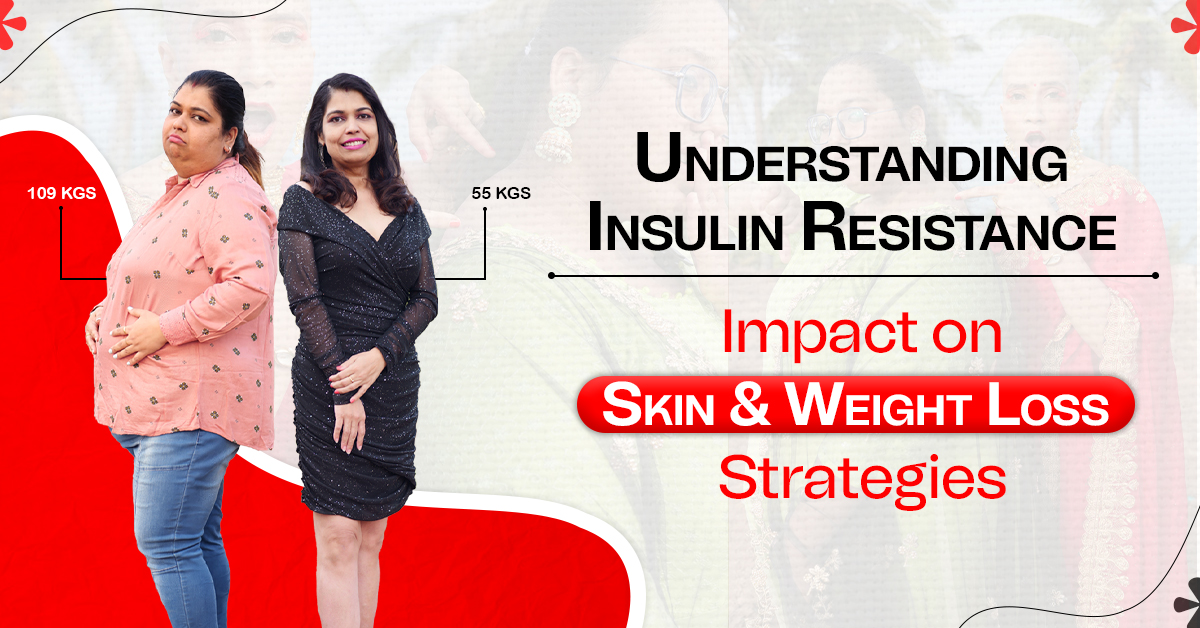
Understanding Insulin Resistance: Impact on Skin & Weight Loss Strategies
Have you ever wondered why certain parts of your body, like your neck, thighs, or armpits, might appear darker than the rest of your skin? It’s often due to something called insulin resistance. This happens when our body has trouble using insulin properly, especially in people who are overweight or obese.

Insulin is like a key that helps our body use sugar (glucose) for energy. But when we eat a lot of carbohydrates, like bread, pasta, or sugary foods, our body might struggle to respond well to insulin. This resistance to insulin can lead to darker patches on the skin.
If these signs of insulin resistance are ignored and we keep consuming lots of carbs, it could eventually lead to a condition called type 2 diabetes. In diabetes, the body can’t manage sugar levels properly, causing serious health issues.
Now, here’s the good news: By making changes in our diet and reducing the amount of carbohydrates we eat, we can not only make it easier to lose weight but also improve insulin resistance. And as a bonus, those dark patches on the skin might start disappearing within a few months!
So, if you’re interested in losing weight—up to 12 kilograms in just one month—and having clearer skin, you can send your weight and height via WhatsApp to +91 8595005793.
Let’s delve a bit deeper into how cutting down on carbohydrates can help:
Understanding Carbohydrates and Insulin Resistance:
Carbohydrates are found in many foods, especially those that are sugary or starchy. When we eat carbs, our body breaks them down into sugar (glucose), which is used for energy. Insulin helps this sugar enter our cells to provide energy.
However, when we consume excessive carbs over a prolonged period, our body might become less responsive to insulin. This condition is known as insulin resistance. It’s like our body’s cells become resistant to the effects of insulin, making it harder for sugar to enter the cells and leaving it circulating in the blood.
Effects of Insulin Resistance:
Insulin resistance doesn’t just affect how our body uses sugar; it can also lead to various health issues. Apart from the darkening of certain skin areas, it can increase the risk of developing type 2 diabetes. Additionally, it’s often linked to obesity, high blood pressure, and heart problems.
How Cutting Carbs Helps:
Reducing carbohydrate intake can be beneficial in multiple ways. It can lead to weight loss, which in turn can improve insulin resistance. When we eat fewer carbs, our body switches to burning stored fat for energy, aiding in weight loss. This reduction in carbs also helps in stabilizing blood sugar levels and improving insulin sensitivity.
In essence, by making smarter choices in our diet and opting for foods lower in carbohydrates, we can significantly improve our overall health, promote weight loss, and potentially reduce those dark patches on the skin caused by insulin resistance.
Conclusion
In conclusion, understanding the connection between insulin resistance, carbohydrates, and skin conditions sheds light on how our dietary choices impact our overall health. Dark patches on the skin, often observed around the neck, thighs, or armpits, can be a visible indicator of underlying insulin resistance, especially in individuals carrying excess weight.
The excessive intake of carbohydrates plays a significant role in the development of insulin resistance, potentially leading to serious health concerns like type 2 diabetes. However, taking proactive steps to reduce carbohydrate consumption can offer promising benefits.
By making conscious decisions to lower our intake of carbohydrates, we not only facilitate weight loss but also improve insulin sensitivity. This dietary change can set in motion a positive cycle: weight loss helps combat insulin resistance, and improved insulin sensitivity further supports weight management and overall health.
The journey toward better health isn’t just about shedding kilograms; it’s about nourishing our bodies and cultivating healthier habits. Choosing whole foods, lean proteins, and complex carbohydrates over processed and sugary options can make a significant difference in our well-being, both inside and out.
Therefore, if you’re considering a transformation toward a healthier lifestyle—weight loss up to 12 kilograms in a month and clearer skin—remember that taking steps to reduce carbohydrate intake could be a powerful starting point.
By acknowledging the impact of our dietary choices and embracing healthier alternatives, we pave the way for a brighter, healthier future—a future where not only weight loss but also improvements in skin conditions are within reach.
FAQs
- Why does insulin resistance cause dark skin in specific areas?
Insulin resistance can lead to darker skin patches due to changes in skin pigmentation caused by hormonal imbalances related to insulin.
- Can reducing carbs completely get rid of insulin resistance?
While reducing carbs can significantly improve insulin resistance, complete elimination of carbs isn’t necessary. Moderation and choosing healthier carb options can make a big difference.
- Are there specific foods to avoid for better insulin sensitivity?
Foods high in refined sugars and processed carbohydrates are best avoided to improve insulin sensitivity. Opt for first-class proteins and fats instead.
- Will weight loss help improve skin conditions caused by insulin resistance?
Yes, weight loss resulting from a reduced-carb diet can contribute to improving skin conditions caused by insulin resistance.
- How long might it take to see improvements in skin conditions after reducing carbs?
Typically, improvements in skin conditions due to reduced insulin resistance may start becoming visible within a few months of adopting a lower-carb diet.